Cognitive Science
7 posts · all posts
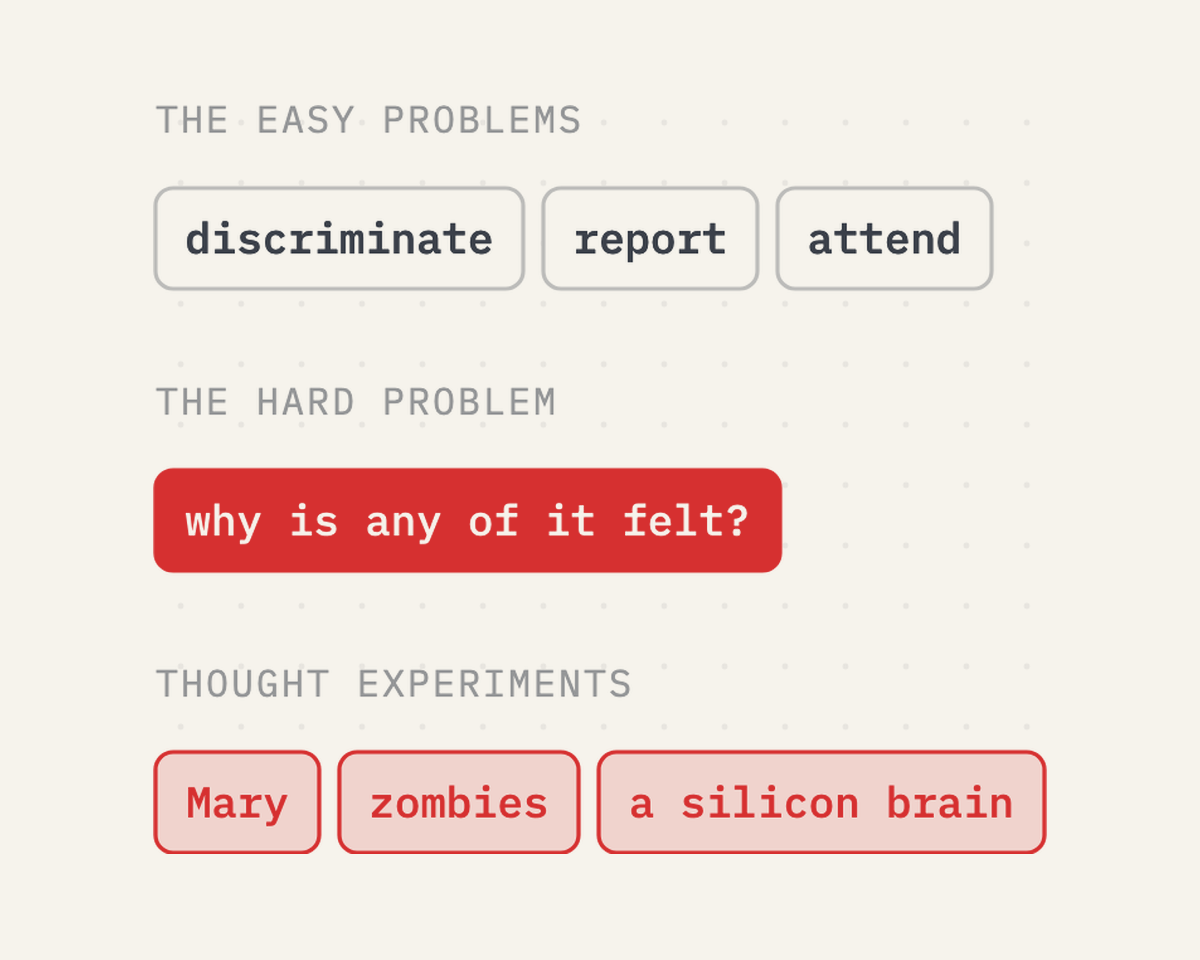
Theories of consciousness and the hard problem
The hard problem of consciousness for readers used to physicalism. Thought experiments from Mary's room to fading qualia, positions from illusionism to panpsychism, the scientific theories, the first experiment that tested two of them against each other, and what they imply for AI
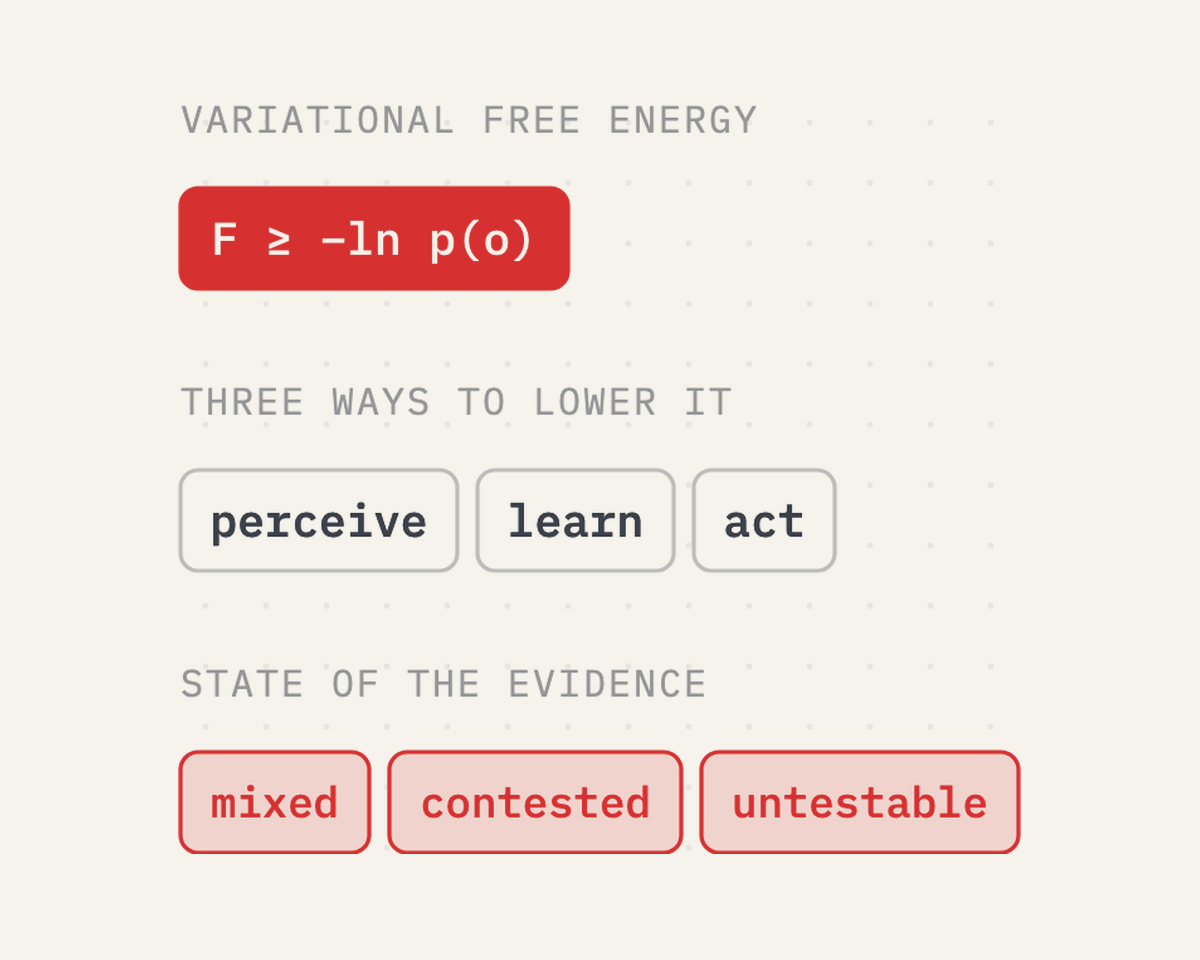
How Karl Friston's free energy principle works and what its critics say
Karl Friston's free energy principle with exact formulas and plain words. Surprisal and variational free energy, its link to the ELBO of machine learning, predictive coding on a worked example, active inference, Markov blankets, the experimental evidence and the main criticisms
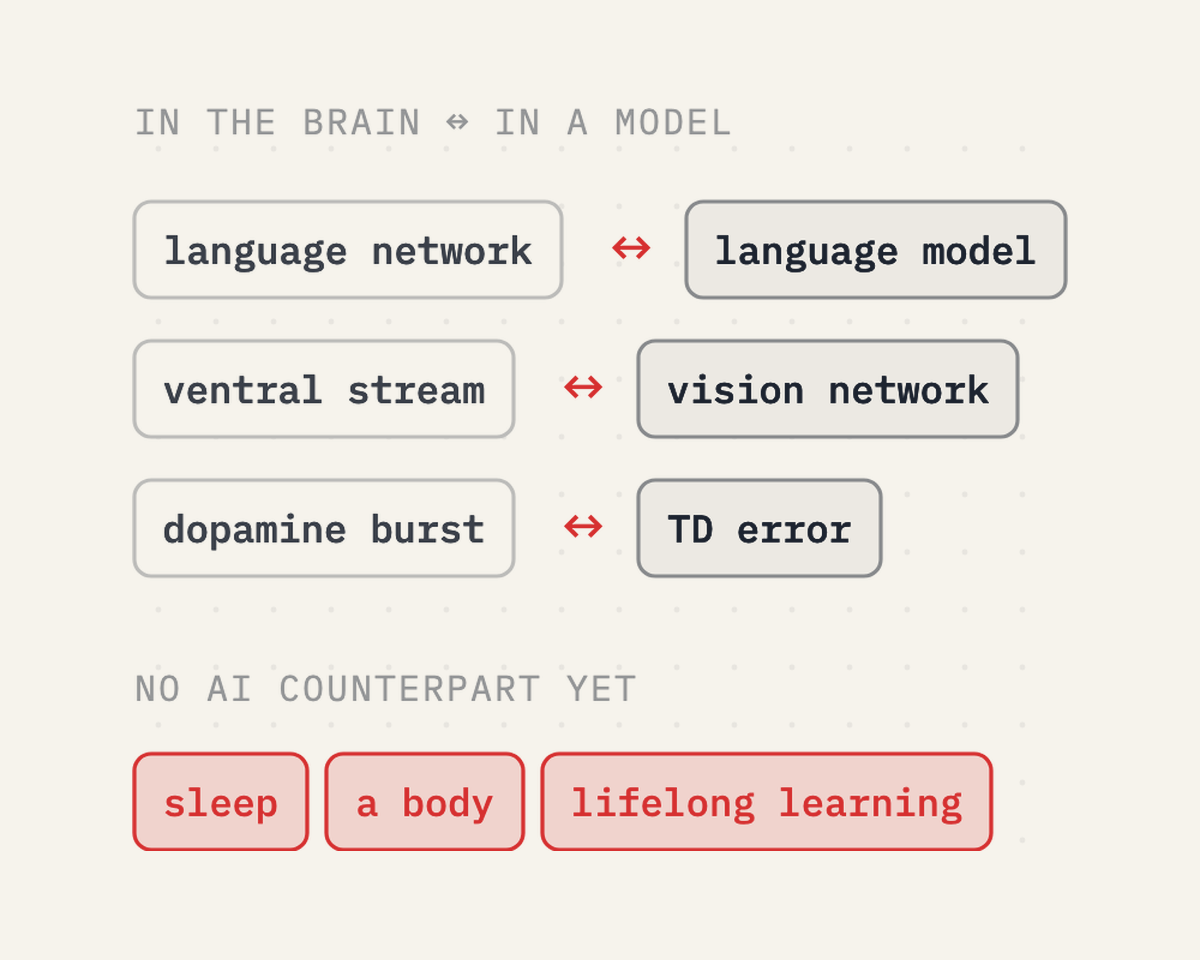
How similar is the human brain to AI models?
A decade of neuroscience has compared brains with neural networks. Language models predict the brain's language network, vision models the visual cortex and reinforcement learning the dopamine signal, while memory, bodies, energy and lifelong learning are where the two still differ most
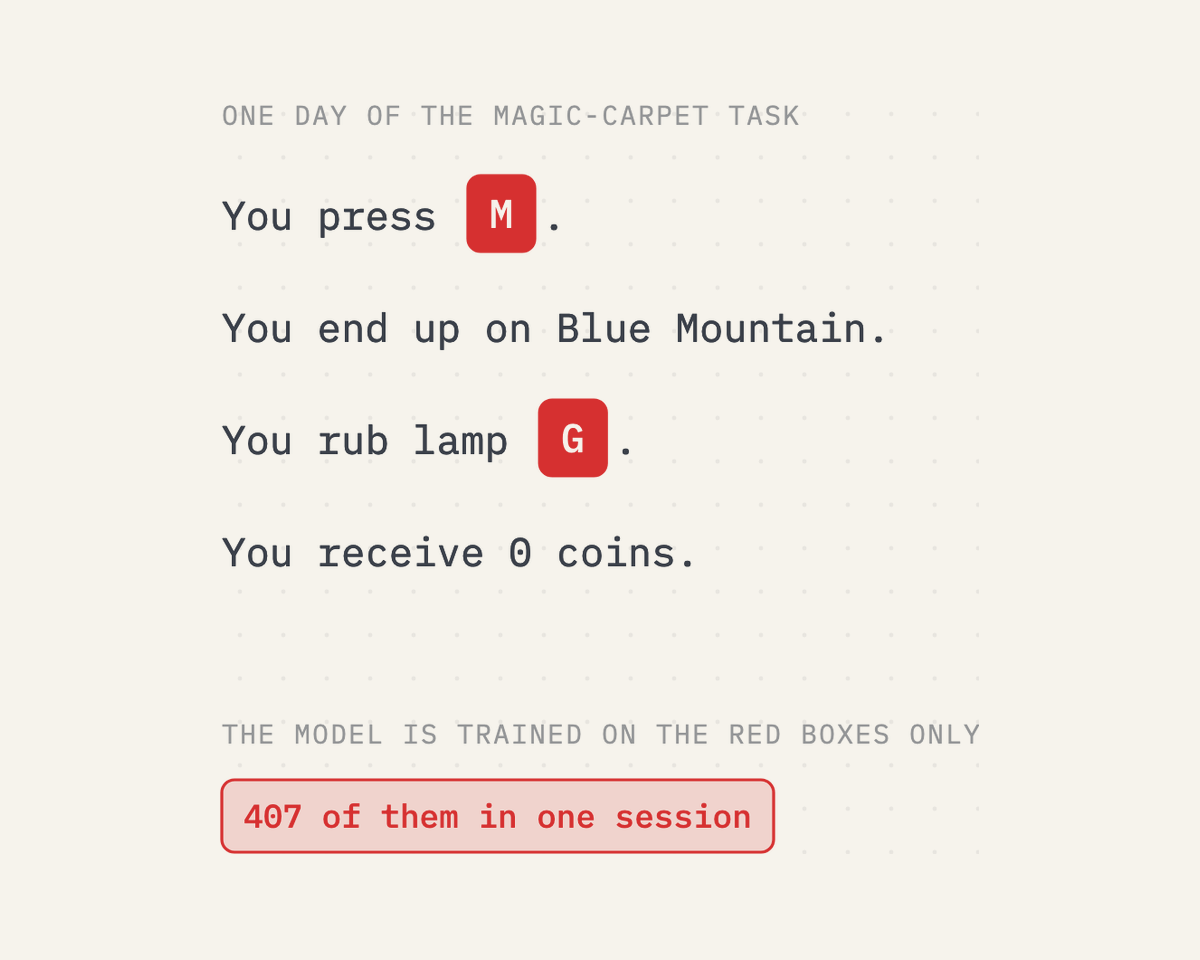
Is Centaur a model of the mind? An LLM fine-tuned on 160 psychology experiments
In 1973 Allen Newell asked psychology for one system that performs all its tasks. In 2025 a Llama fine-tuned on 160 experiments was presented as that system. What Centaur predicts, what happens when you take away its instructions, and why its own authors went on to beat it with half a million parameters
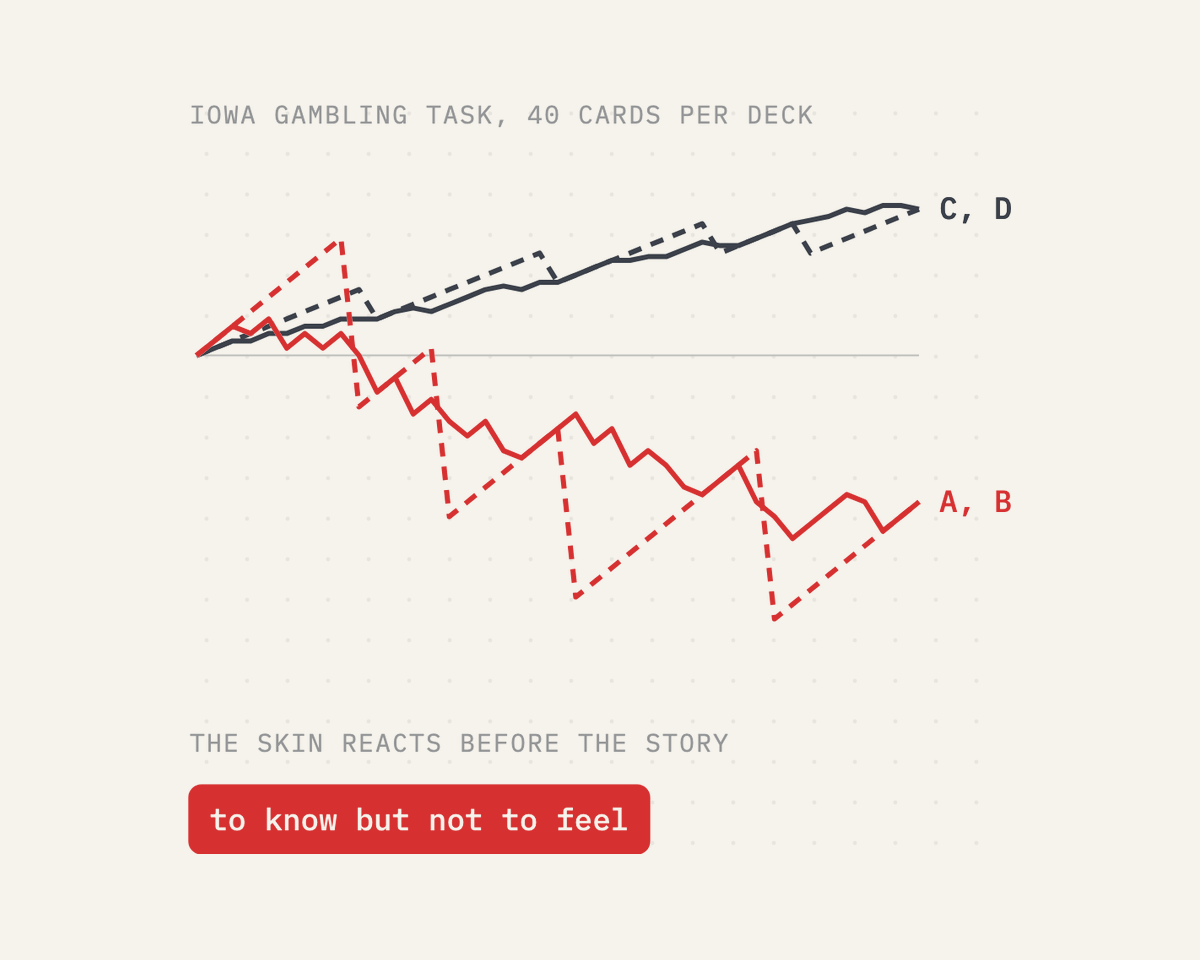
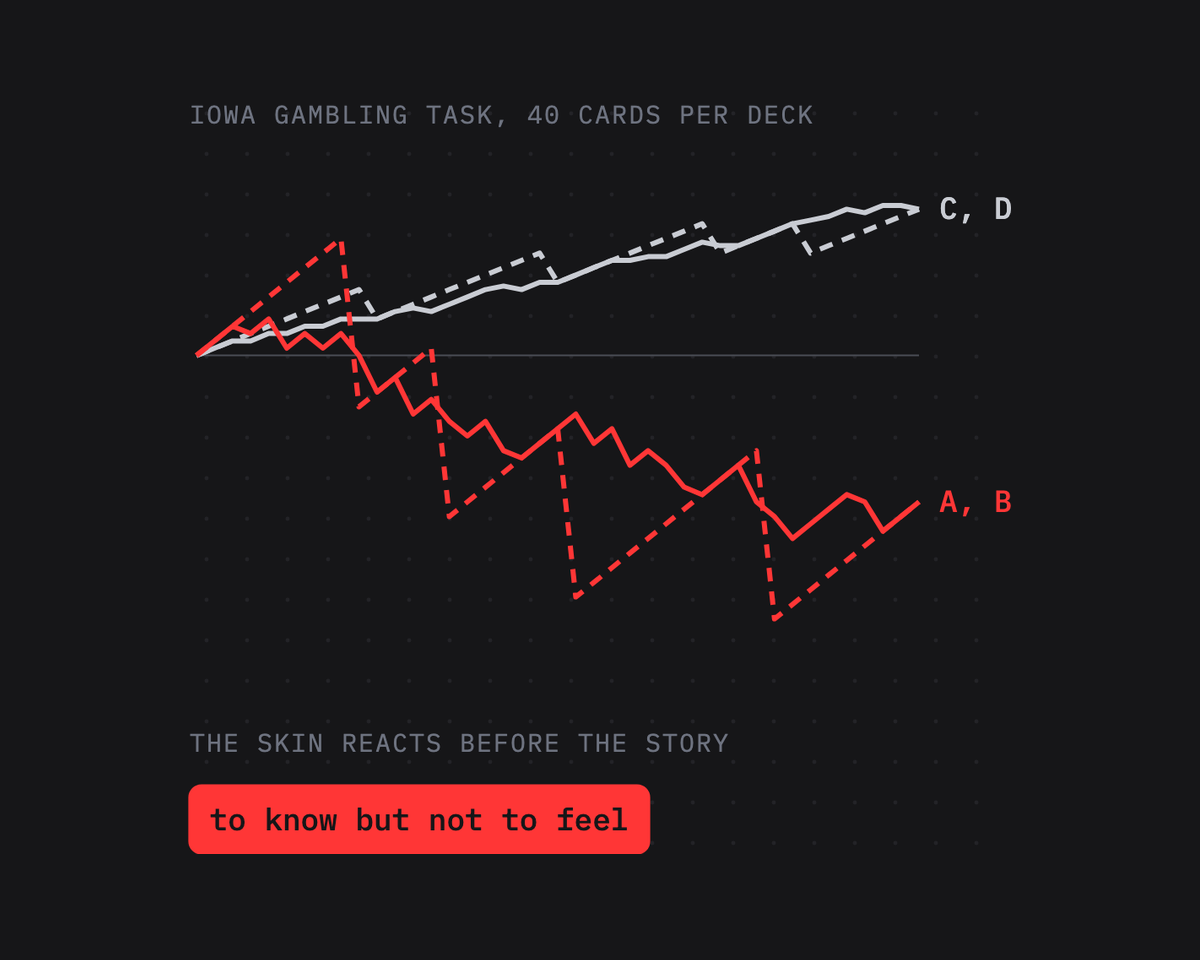
Damasio's somatic marker hypothesis: the body in decision-making
A patient who could reason about everything and decide nothing, a card game whose decks are rigged, and a theory that puts the body inside decisions: Damasio's somatic markers, the evidence for them and the evidence against
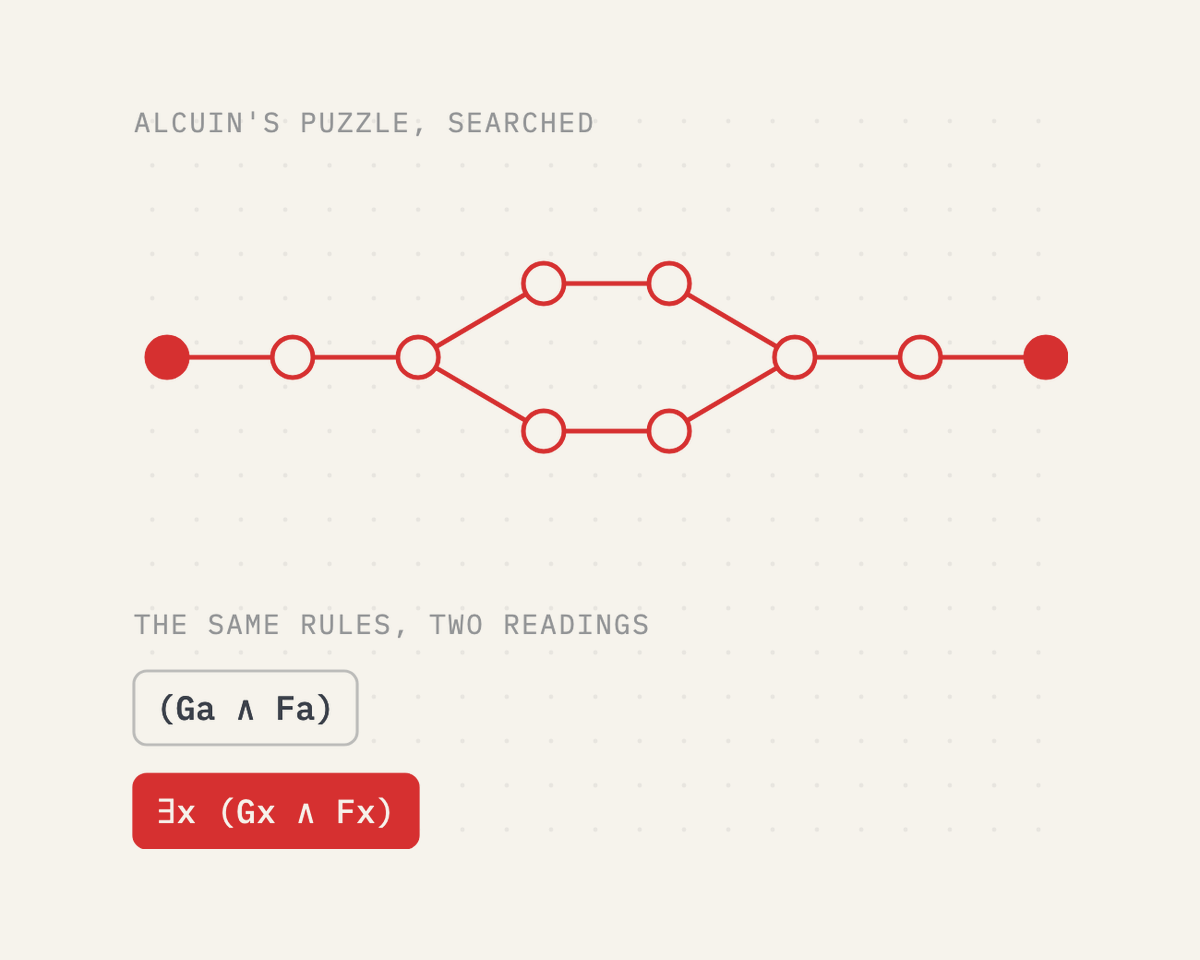
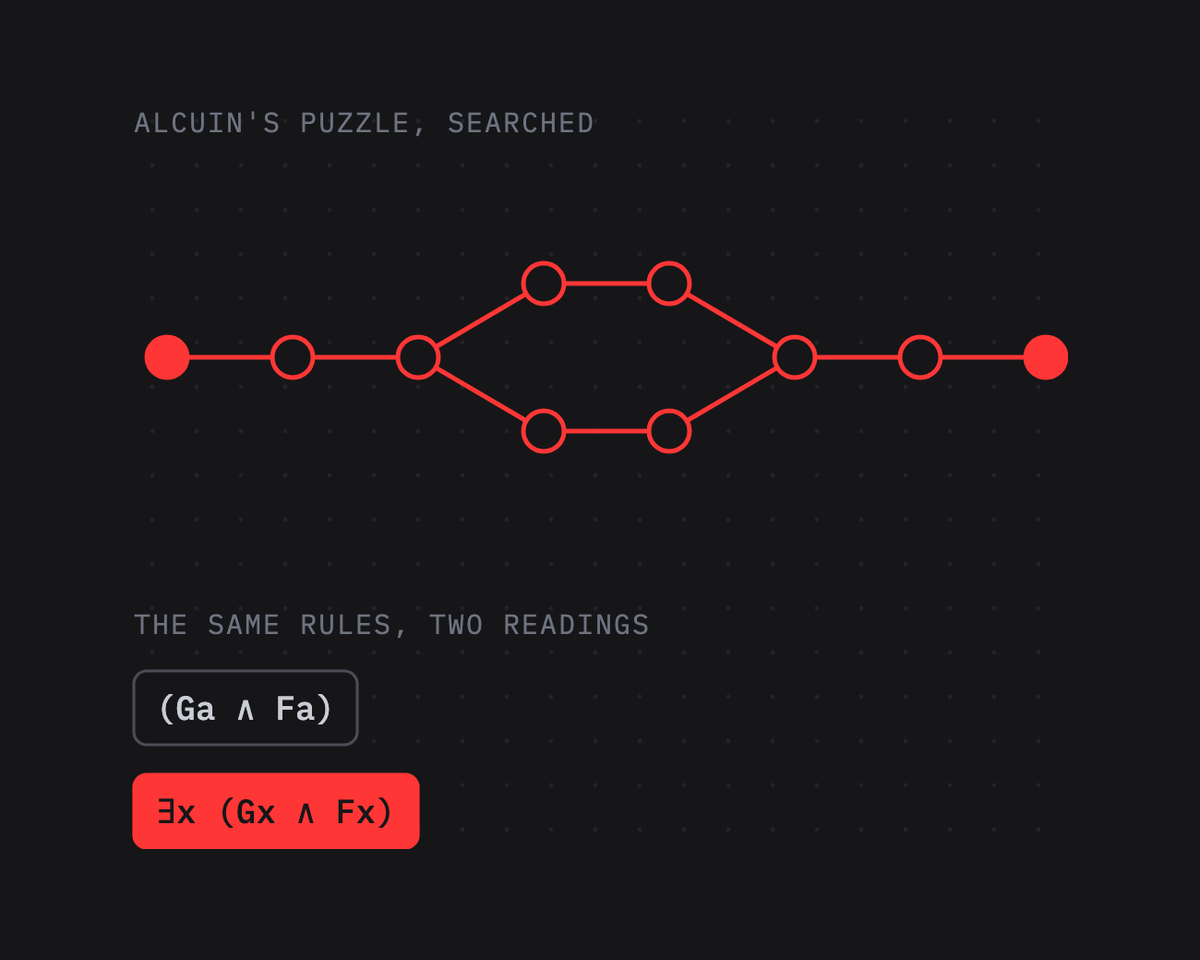
Is the mind a computer? The computational theory of mind
Symbols, rules and meaning: the computational theory of mind from McCulloch and Pitts to the Chinese Room, and what language models add to an old argument
Can AI be creative?
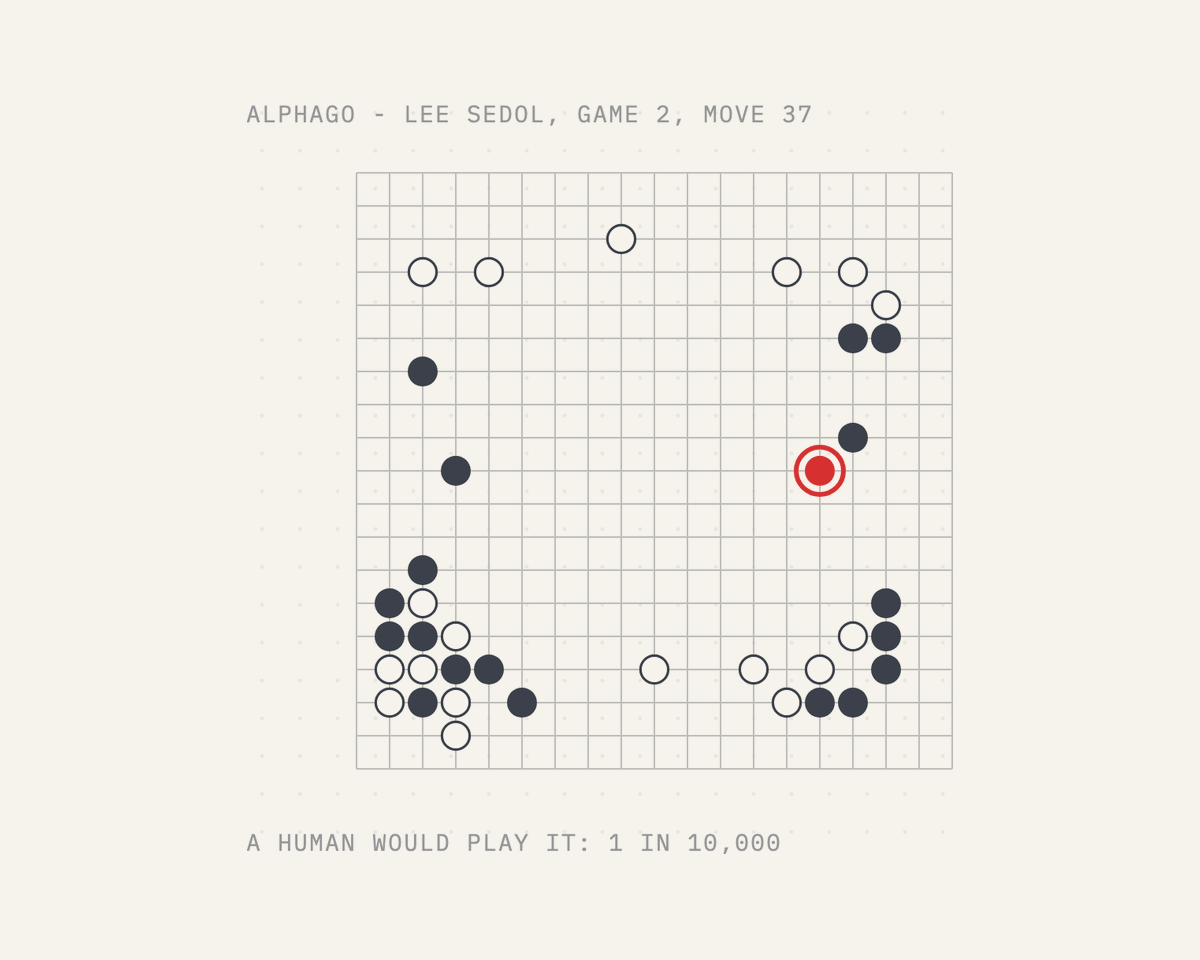
What happens in a brain that has a new idea, where recombination stops, and what the measurements of machine creativity show, from AlphaGo's move 37 to GPT-4 on the Alternate Uses Task